What is a temporary certificate of occupancy?
A temporary certificate of occupancy (TCO) is a conditional permit issued by a local building department, allowing a commercial building or part of it to be occupied for a limited time before all final inspections and code requirements for a permanent Certificate of Occupancy (CO) are met. It signifies that the building is substantially safe for limited use despite minor outstanding work.
Key Takeaways
A TCO is a conditional, time-limited permit allowing partial building occupancy, crucial for phased commercial project completion.
For multi-location operators, precise TCO management is a strategic imperative to avoid compliance debt and operational delays across diverse jurisdictions.
TCOs typically last 30-180 days, with limited extension possibilities; expiration without a final CO leads to severe fines and potential shutdowns.
The application process for a TCO involves specific documentation, multiple inspections (fire, electrical, health), and adherence to conditional approvals.
Operating under a TCO building requires strict compliance with specified restrictions, as non-adherence can void insurance, incur penalties, and damage reputation.

Table of Contents
What is a Temporary Certificate of Occupancy, and Why Does It Matter?
How Does a TCO in Construction Impact Project Timelines and Operations?
Understanding the Difference: Temporary Certificate of Occupancy vs. Certificate of Occupancy
Operating Your Business with a TCO Building: Compliance and Risks
Common Challenges and Mitigation Strategies for Multi-Location Operators
How to Secure Your Temporary Certificate of Occupancy: A Step-by-Step Guide
What are the Financial Implications of a Temporary Certificate of Occupancy?
How Long Can a Temporary Certificate of Occupancy Last, and What Happens Next?
Ensuring a Smooth Transition from Temporary to Final Certificate of Occupancy
For multi-location operators, navigating the intricate landscape of commercial permits and certifications is a constant challenge. Among these, the certificate of occupancy (CO) stands as a foundational requirement, yet its precursor, the temporary certificate of occupancy (TCO), often proves to be a more complex and strategically significant hurdle. While seemingly a stopgap, a TCO can dictate project timelines, operational readiness, and long-term compliance for businesses expanding across diverse jurisdictions.
As Michael Anderson, Compliance Research & Editorial Reviewer at Commercial Compliance Hub, my work involves meticulously verifying business license, permit, and certificate information against primary government sources. This rigorous focus on accuracy reveals a critical insight for scaling businesses: treating a TCO as merely a 'temporary' permission can be a costly oversight, leading to systemic compliance debt and unscalable operations. The common industry advice to "just get the TCO and worry about the CO later" is, for multi-location businesses, a perilous trap. Precision in TCO management, informed by reliable data, is not just a regulatory obligation but a strategic imperative to avoid cascading failures in new market entries.
What is a Temporary Certificate of Occupancy, and Why Does It Matter?
A temporary certificate of occupancy (TCO) is a conditional permit issued by a local building department that allows a portion or all of a commercial building to be occupied or used for its intended purpose before all final inspections and code requirements for a permanent Certificate of Occupancy (CO) have been met. It is a legal document that acknowledges a building is substantially complete and safe for limited occupancy, despite minor outstanding work or administrative tasks.
The Primary Purpose and Scope of a TCO
The primary purpose of a TCO is to facilitate the phased completion and occupancy of a building, particularly in large commercial projects or those with complex build-outs. It allows businesses to commence operations, generate revenue, and begin fitting out interiors while non-critical elements or final administrative steps are finalized. This is particularly crucial for multi-location businesses that often face tight opening schedules and significant financial pressure to activate new sites.
For instance, a restaurant might receive a TCO allowing dining room operations while exterior landscaping or a non-essential storage area is still under construction. The TCO explicitly outlines what portions of the building can be occupied, under what conditions, and for what duration. This specificity is vital for compliance, as any deviation can lead to immediate penalties and operational shutdowns.
Typical Scenarios Requiring a TCO
TCOs are commonly issued in scenarios where a project is largely complete but requires minor, non-safety-critical items to be addressed. These might include:
Punch List Items: Minor cosmetic finishes, non-essential electrical outlets, or minor landscaping.
Off-Site Improvements: Public sidewalk repairs or utility connections that do not impact immediate safety.
Phased Occupancy: When different sections of a large commercial complex are completed at different times.
Administrative Delays: Waiting for final paperwork from external agencies or utility companies.
Understanding these scenarios helps multi-location operators anticipate when a TCO might be necessary and integrate it into their project planning, rather than encountering it as an unexpected delay. The International Code Council (ICC) provides foundational guidelines for such occupancy classifications, which local jurisdictions adapt (Source: International Code Council, 2023).
How Does a TCO in Construction Impact Project Timelines and Operations?
The presence of a TCO in construction projects is a critical factor influencing project timelines, financial outlays, and the speed of market entry for commercial enterprises. For multi-location businesses, the ability to open a new site even partially can significantly impact revenue projections and operational continuity across their portfolio.
Enabling Early Operations and Revenue Generation
A TCO allows businesses to begin operations and generate revenue sooner than if they had to wait for the final Certificate of Occupancy. This is particularly impactful for industries like retail, restaurants, and fitness studios, where every day of delayed opening represents significant lost income. For a multi-location operator with 10 new sites scheduled to open in a year, shaving even a week off each opening timeline due to a TCO can translate into substantial aggregate revenue gains.
However, this early access comes with conditions. The TCO will specify exactly what operations are permitted. For example, a childcare facility might get a TCO for administrative offices and a few classrooms, but not for outdoor play areas until final safety fencing is approved. This requires meticulous operational planning to ensure compliance from day one.
Coordination with Contractors and Project Managers
Effective management of a TCO in construction necessitates seamless coordination between the business owner, general contractor, and various subcontractors. The general contractor is typically responsible for ensuring that all conditions for the TCO are met, including specific inspections for fire safety, structural integrity, and basic utilities. For multi-location firms, this requires standardizing communication protocols and TCO checklists across all development projects.
Project managers for scaling businesses must actively monitor the progress of "punch list" items and ensure that the scope of work aligns with TCO requirements. Delays in addressing these items can jeopardize the TCO's validity or delay the final CO, creating a costly bottleneck. A study by the National Association of Home Builders (NAHB) indicates that permitting and regulatory compliance can add significant time to construction projects, making TCOs a vital tool for phased delivery (Source: NAHB, 2022).
Navigating the TCO Permit Application Process
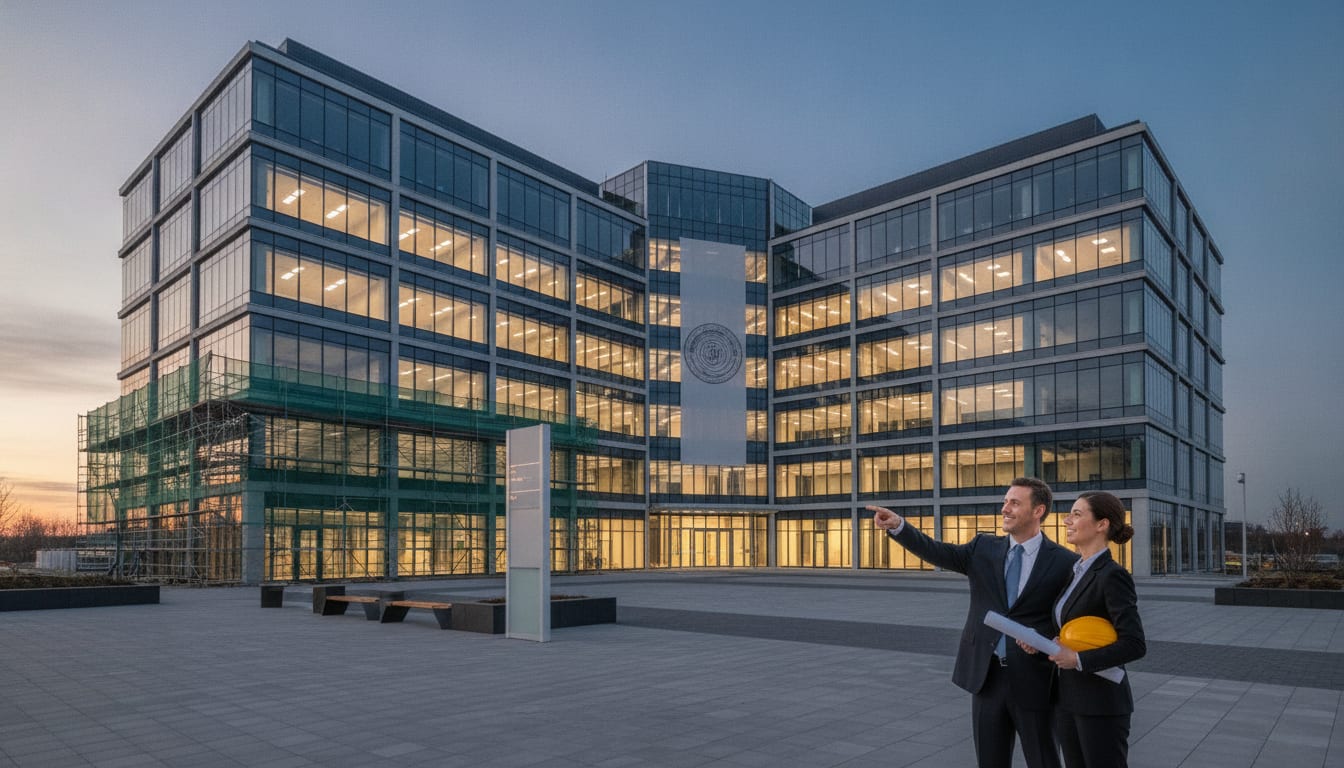
Securing a TCO permit involves a structured application and inspection process that varies significantly by jurisdiction. For multi-location businesses operating across different cities and states, understanding these local nuances is paramount to avoid delays and ensure a smooth transition to operational readiness.
Application Requirements and Documentation
The application for a TCO permit typically requires submission of specific documentation, which may include:
A formal application form, often available on the local building department's website.
A list of outstanding work items (the "punch list") that prevent the issuance of a final CO.
Architectural and engineering drawings indicating the areas to be occupied under the TCO.
Proof of liability insurance.
Payment of applicable fees (which can range from a few hundred to several thousand dollars, depending on the project size and jurisdiction).
Written approval from relevant departments, such as fire safety, health, and zoning, confirming the safety and readiness of the permitted areas.
Given the variations, multi-location operators must leverage resources like the Commercial Compliance Hub, which provides jurisdiction-specific requirements, to ensure all necessary paperwork is prepared accurately and submitted on time. This proactive approach minimizes the risk of application rejection due to incomplete documentation.
Inspections and Conditional Approvals
Following application submission, a series of inspections will be conducted by various municipal departments. These typically include:
Building Inspections: Structural integrity, general construction, and egress paths.
Fire Safety Inspections: Sprinkler systems, fire alarms, emergency lighting, and exit routes (Source: NFPA, 2023).
Electrical Inspections: Wiring, panels, and emergency power.
Plumbing Inspections: Water supply, drainage, and fixture installation.
Health Inspections: Particularly for food service establishments, ensuring basic sanitation and operational readiness.
If minor deficiencies are found that do not pose an immediate safety risk, the building department may issue a TCO with specific conditions for remediation. These conditions will have strict deadlines. Failure to meet these deadlines can result in the revocation of the TCO, significant fines, or even forced closure of the business, a particularly damaging outcome for a new location needing to establish market presence.
Streamlining the Process for Multi-Location Businesses
For multi-location operators, the TCO permit process can be streamlined by:
Developing a standardized TCO application checklist applicable across all new locations, adjusting only for specific local requirements.
Establishing strong relationships with local building department contacts in key expansion markets.
Utilizing digital tools to track permit statuses and deadlines across multiple projects.
Conducting pre-application meetings with building officials to clarify expectations and identify potential issues early.
For more information on general permit processes, explore resources like the permits explained section of the Commercial Compliance Hub.
Understanding the Difference: Temporary Certificate of Occupancy vs. Certificate of Occupancy
Distinguishing between a temporary certificate of occupancy vs certificate of occupancy is fundamental for any commercial operator, especially those with multi-location portfolios where compliance standards must be uniformly understood and applied. While both are official documents permitting building use, their legal standing, permanence, and operational implications differ significantly.
The Nature of Permanence and Completeness
A Certificate of Occupancy (CO) is a permanent document issued once all construction work is completed, all inspections have passed, and the building fully complies with all applicable building codes, zoning ordinances, and other relevant regulations. It signifies that the building is safe, legally habitable, and ready for its intended use without any outstanding conditions. For a business, obtaining a final CO means full legal clearance to operate without restrictions related to the building's physical state.
In contrast, a TCO is inherently temporary and conditional. It acknowledges that while the building is safe for limited use, certain non-critical items remain unfinished. The "temporary" aspect is not merely a formality; it carries legal weight, imposing specific limitations and a finite expiration date, typically ranging from 30 to 180 days, though extensions are sometimes possible. Operating under a TCO means operating within a provisional legal framework.
Operational and Legal Implications
The distinction between a TCO and a CO carries several critical operational and legal implications:
Scope of Use: A CO grants full, unrestricted use of the entire premises as designed. A TCO often restricts specific areas, limits occupancy numbers, or prohibits certain types of operations until outstanding issues are resolved. For a retail business, this might mean a TCO prevents the use of a back storage area or restricts customer flow to certain sections.
Insurance Coverage: While most insurance policies cover operations under a valid TCO, it is crucial for businesses to verify this with their insurance providers. Some policies may have specific clauses or require endorsements for operations under a conditional occupancy permit.
Financing and Lease Agreements: Lenders and landlords often prefer a final CO as a condition for releasing funds or finalizing lease terms. Operating solely on a TCO for an extended period could complicate financing or trigger specific clauses in lease agreements.
Permit Cascading: Many other business permits and licenses (e.g., health permits, liquor licenses) often require a final CO before they can be issued or fully activated. A TCO might allow for preliminary permits, but the final CO is the linchpin for comprehensive compliance. For more on this, consult a guide on certificate of occupancy explained.
For multi-location operators, the risk lies in allowing a TCO to lapse or treating its conditions with insufficient urgency. This can lead to a "compliance debt" where unresolved TCO conditions accumulate across multiple sites, creating a systemic vulnerability that can trigger fines, operational shutdowns, and significant reputational damage. The Hub emphasizes that accurate, up-to-date data on each TCO's status and conditions is non-negotiable for scalable compliance.
Operating Your Business with a TCO Building: Compliance and Risks
Operating a business from a TCO building means adhering to specific compliance requirements and understanding inherent risks that are not present once a final Certificate of Occupancy is issued. For multi-location businesses, managing these conditions across various sites, each with its own TCO terms and expiration dates, demands a rigorous and centralized approach to compliance.
Specific Restrictions and Conditions of a TCO
Every TCO comes with explicit conditions that must be strictly followed. These can vary widely but commonly include:
Limited Occupancy: Restrictions on the maximum number of people allowed in the building or specific areas.
Restricted Areas: Certain parts of the building may be off-limits to employees or customers until outstanding work is completed and re-inspected.
Temporary Amenities: Reliance on temporary utilities, emergency exits, or fire suppression measures until permanent systems are fully operational and approved.
Ongoing Construction: Requirements to cordon off active construction zones and ensure worker safety protocols are in place, separate from operational areas.
Time Limits: A defined expiration date by which all outstanding conditions must be resolved and a final CO obtained.
Failure to adhere to any of these conditions can lead to immediate violations, fines, and even the forced closure of the business. For a multi-location enterprise, a single non-compliant site can trigger heightened scrutiny across the entire portfolio, increasing overall operational risk.
Penalties for Non-Compliance and Overstaying
The consequences of mismanaging a TCO are severe and can significantly impact a business's bottom line and reputation. Penalties for non-compliance or allowing a TCO to expire without obtaining a final CO or an extension include:
Fines: Daily fines can accrue, quickly escalating into substantial financial burdens. These fines are often higher for commercial properties due to the potential public safety risks.
Stop-Work Orders: Building departments can issue stop-work orders, halting any remaining construction and potentially impacting the timeline for obtaining a final CO.
Operational Shutdowns: In severe cases, particularly if safety hazards are identified or the TCO has significantly lapsed, the municipality can order the business to cease operations entirely, leading to catastrophic revenue loss and customer dissatisfaction.
Revocation of Licenses: Other operational licenses (e.g., health permits) can be jeopardized if the fundamental Certificate of Occupancy status is in violation.
For multi-location operators, these penalties are not isolated incidents but represent systemic risks. A proactive strategy for managing TCO expirations and conditions is essential to prevent these issues from becoming chronic compliance problems across their expanding footprint.
Insurance Implications and Liability
Operating under a TCO building can also have implications for business insurance and liability. While many general liability policies are structured to cover operations under a valid TCO, it is critical to confirm this with insurance providers. Specific concerns include:
Uncovered Risks: If an incident occurs in an area of the building not covered by the TCO, or if the TCO has expired, insurance coverage could be denied.
Increased Premiums: Some insurers might view TCO operations as higher risk, potentially leading to increased premiums or specific endorsements.
Liability: Businesses may face increased liability if an accident occurs due to an unresolved condition listed in the TCO, especially if the business failed to adequately mitigate the risk or inform patrons.
Multi-location businesses should ensure their insurance strategy explicitly accounts for TCO phases, including clear communication with brokers about the operational status of each new location. This mitigates financial exposure and safeguards against unforeseen liabilities during the critical early stages of a new site's operation.
Common Challenges and Mitigation Strategies for Multi-Location Operators
For multi-location operators, the challenge of managing temporary certificates of occupancy is amplified by geographical dispersion and varied local regulations. The "missing middle" — businesses with 3 to 50 locations — are particularly vulnerable, lacking the dedicated compliance teams of larger enterprises but facing more complexity than single-location businesses. This section addresses these unique challenges and outlines proactive mitigation strategies.
Managing TCOs Across Diverse Jurisdictions
A significant hurdle is the lack of uniformity in TCO requirements, durations, and extension processes across different cities, counties, and states. What is permissible in one jurisdiction might be strictly prohibited in another. This regulatory fragmentation can lead to:
Confusion and Misinterpretation: Operations teams might apply a standardized understanding of TCOs that doesn't align with local codes.
Inconsistent Compliance: Leading to varied levels of risk across the business portfolio.
Increased Research Burden: Each new location requires specific, in-depth research into local TCO regulations.
Mitigation Strategy: Leverage centralized, verified data sources. The Commercial Compliance Hub is designed precisely for this, offering granular, jurisdiction-specific information on permits and certificates. Multi-location operators should integrate this data into their location scouting and project planning phases, ensuring that local TCO nuances are understood from the outset, not as an afterthought.
The Compliance Debt Trap
The "compliance debt" trap is a critical risk for scaling businesses. This occurs when TCO conditions are not addressed promptly, or TCOs are allowed to expire, leading to a backlog of unresolved compliance issues across multiple sites. Each unaddressed TCO becomes a ticking time bomb, increasing the aggregated risk of fines, operational disruptions, and legal action.
Mitigation Strategy: Implement robust tracking and alert systems. A simple spreadsheet is insufficient for 3-50 locations. Businesses need a system that tracks TCO expiration dates, outstanding conditions, responsible parties, and progress toward final COs for every location. Regular audits of TCO status should be mandatory, with clear escalation paths for overdue items.
Standardizing Processes for Scalability
Without standardized procedures for TCO application, management, and transition to final COs, each new location becomes an isolated, labor-intensive project. This lack of scalability drains resources and increases the likelihood of errors.
Mitigation Strategy: Develop a comprehensive TCO playbook. This playbook should outline:
Standard operating procedures for TCO application, including required documentation and internal approvals.
A checklist for pre-TCO inspections and readiness assessments.
Guidelines for managing operations under a TCO, including communication protocols for employees and customers regarding restricted areas or services.
A clear process for tracking and resolving outstanding TCO conditions.
Protocols for requesting TCO extensions or applying for the final CO.
This internal guide, informed by external data from sources like the Commercial Compliance Hub, ensures consistency and efficiency, enabling faster, more compliant scaling. For businesses looking to expand, understanding the process of opening a second location provides further context on managing such complexities.
How to Secure Your Temporary Certificate of Occupancy: A Step-by-Step Guide
Securing a temporary certificate of occupancy is a methodical process that requires careful planning and execution. For multi-location businesses, establishing a repeatable, efficient process is key to rapid and compliant expansion. This step-by-step guide outlines the typical journey.
Step 1: Pre-Application and Planning
Before even applying, engage in thorough pre-application planning. This involves:
Reviewing Local Codes: Consult the specific building and zoning codes of the jurisdiction where the project is located. Identify TCO-specific requirements and typical durations.
Identify Outstanding Items: Work with your general contractor to compile a detailed "punch list" of all remaining construction items that prevent a final CO. Categorize these by urgency and safety impact.
Pre-Application Meeting: Schedule a meeting with the local building department to discuss the project, the need for a TCO, and clarify any ambiguities in the application process. This proactive step can save significant time and prevent future rejections.
Define Scope of TCO: Clearly delineate which parts of the building will be occupied and for what purpose under the TCO. This will be a core component of your application.
Michael Anderson's experience highlights that many delays stem from a lack of upfront clarity on local requirements. "Verifying every detail against the primary source is non-negotiable," he notes. "Assumptions based on prior projects in different towns are a common pitfall."
Step 2: Prepare and Submit the TCO Application
With planning complete, gather all necessary documentation and formally apply:
Complete Application Form: Fill out the TCO application form accurately and completely.
Attach Required Documentation: Include the punch list, site plans, fire safety plans, and any other documents required by the jurisdiction.
Pay Fees: Submit the application fee. Ensure you understand the fee structure, as some jurisdictions charge based on project size or anticipated TCO duration.
Submit to Proper Department: Ensure the application is submitted to the correct department (e.g., Building & Safety, Planning Department) and that you receive confirmation of receipt.
Many jurisdictions now offer online portals for permit applications, which can streamline the submission process for multi-location operators. However, always confirm the specific submission method with the local authority.
Step 3: Undergo Inspections and Address Conditions
This is a critical phase where the building's readiness is assessed:
Schedule Inspections: Coordinate with the building department for necessary fire, electrical, plumbing, mechanical, and structural inspections for the areas to be occupied.
Be Present for Inspections: Ensure your general contractor or a knowledgeable representative is on site during inspections to answer questions and facilitate the process.
Receive Inspection Results: Obtain a detailed report from inspectors. If deficiencies are noted, work promptly to address them.
Meet Conditions: If a TCO is granted with conditions, immediately begin resolving the outstanding items. Document all remediation efforts, including dates, personnel, and materials used.
Failure to address conditions within the specified timeframe will jeopardize the TCO and could result in its revocation. Proactive communication with the building department about progress is highly recommended.
Step 4: Obtain and Manage the TCO
Once all conditions for TCO issuance are met, the permit will be issued:
Receive TCO Document: Secure the official TCO document, which will specify its effective date, expiration date, and any ongoing conditions or restrictions.
Post TCO: In many jurisdictions, the TCO must be prominently displayed on the premises.
Track Expiration: Immediately log the TCO expiration date and set reminders for follow-up actions. For multi-location businesses, this requires a centralized tracking system.
Plan for Final CO: Concurrently, develop a clear plan to complete all remaining work and apply for the final Certificate of Occupancy well before the TCO expires.
This structured approach, especially for multi-location businesses, can significantly reduce the inherent risks associated with operating under a temporary permit. The Commercial Compliance Hub's requirement checker can assist in identifying these specific jurisdictional steps.
What are the Financial Implications of a Temporary Certificate of Occupancy?
While a TCO can accelerate revenue generation, it also carries distinct financial implications that multi-location operators must carefully consider. These costs extend beyond mere application fees to encompass potential delays, operational inefficiencies, and the significant financial burden of non-compliance.
Direct Costs: Application and Inspection Fees
The most immediate financial implication of a TCO is the cost of the application itself. These fees vary widely by jurisdiction and can be based on factors such as:
Project Valuation: Larger commercial projects typically incur higher fees.
Square Footage: Some municipalities calculate fees based on the total area to be occupied.
Number of Inspections: Additional fees may apply for re-inspections if initial deficiencies are not corrected promptly.
Expedited Processing: Some jurisdictions offer expedited TCO processing for an additional premium, which can be a strategic investment for businesses facing tight opening deadlines.
These direct costs, while generally manageable for a single location, can accumulate rapidly for a multi-location operator with several new sites in development, necessitating careful budgeting.
Indirect Costs: Potential Delays and Lost Revenue
The indirect financial costs of a TCO can far outweigh the direct fees. These often stem from:
Unforeseen Delays: If TCO conditions are more extensive than anticipated, or if inspections reveal unexpected issues, the timeline to full operation can be extended. Each day of delay for a new business location represents lost revenue, employee wages for non-productive staff, and ongoing lease payments without corresponding income.
Restricted Operations: Operating under TCO conditions might mean limited capacity, reduced service offerings, or restricted access for customers. For a restaurant, this could mean fewer tables or no bar service, directly impacting potential sales. For a retail store, it could mean only a portion of the inventory is accessible.
Administrative Overhead: Managing the TCO process, tracking outstanding items, and coordinating re-inspections demands significant staff time, especially for multi-location businesses that lack dedicated compliance teams.
These hidden costs underscore the importance of proactive TCO management and robust project planning. For businesses with tight margins, unexpected delays can severely impact the profitability of a new location launch.
Cost of Non-Compliance: Fines and Legal Fees
The most significant financial risk associated with a TCO is the cost of non-compliance. Allowing a TCO to expire, failing to meet its conditions, or operating outside its permitted scope can lead to:
Hefty Fines: As previously discussed, daily fines can quickly accumulate, reaching tens of thousands of dollars for persistent violations (Source: Municipal Code Enforcement, various cities, 2024).
Forced Closure: A business ordered to shut down faces immediate loss of revenue, damage to brand reputation, and potential legal action from customers or employees.
Legal Expenses: Contesting fines or navigating legal challenges related to TCO non-compliance can incur substantial legal fees.
Increased Insurance Premiums: A history of compliance violations could lead to higher insurance rates or difficulty securing coverage in the future.
For a multi-location operator, a single instance of severe non-compliance at one site can trigger increased scrutiny across their entire portfolio, potentially leading to a cascade of audits and enforcement actions that demand extensive financial and personnel resources. This highlights the unique stance of the Commercial Compliance Hub: accurate TCO management is not merely a formality but a critical financial risk mitigation strategy for scaling businesses.
How Long Can a Temporary Certificate of Occupancy Last, and What Happens Next?
The "temporary" aspect of a TCO is not abstract; it comes with a definitive expiration date. Understanding how long a temporary certificate of occupancy can last, the possibilities for extension, and the critical consequences of expiration is vital for maintaining continuous, compliant operations, particularly for multi-location businesses juggling numerous project timelines.
Typical Durations and Jurisdictional Variations
The standard duration for a TCO varies significantly by local jurisdiction. Commonly, TCOs are issued for periods ranging from 30 to 180 days. Some municipalities might offer a standard 90-day period, while others might issue a TCO for 60 days with a clear option for a single extension. The specific duration is usually tied to the estimated time required to complete the outstanding items.
For multi-location operators, this jurisdictional variation means that a TCO for a new restaurant in Phoenix might have a different lifespan and renewal process than one in Miami or Seattle. Relying on a generic understanding of TCO duration across all sites is a recipe for compliance issues. Accurate, location-specific data, such as that provided by the Commercial Compliance Hub, is indispensable.
Requesting Extensions and Associated Conditions
In many cases, if circumstances prevent the completion of outstanding work within the initial TCO period, businesses can apply for an extension. However, extensions are typically not guaranteed and are often subject to specific conditions:
Justification: A compelling reason for the delay must be provided, such as unforeseen material shortages, contractor issues, or unusually complex construction challenges.
Progress Demonstrated: The building department will often require proof that significant progress has been made on the outstanding items and that the business is actively working towards obtaining a final CO.
Additional Fees: Extension requests often incur additional administrative fees.
Limited Extensions: Most jurisdictions limit the number of extensions, often allowing only one or two, beyond which a new TCO application or immediate final CO is required.
Proactively communicating with the building department about potential delays and submitting extension requests well in advance of the TCO expiration date is a best practice. Waiting until the last minute drastically reduces the chances of approval and increases the risk of operational discontinuity.
Consequences of an Expired TCO
Allowing a TCO to expire without either obtaining a final CO or securing an approved extension is a serious compliance breach with immediate and severe consequences:
Illegal Occupancy: The building becomes illegally occupied, making the business vulnerable to immediate shutdown orders.
Fines and Penalties: Substantial daily fines will begin accruing from the date of expiration.
Insurance Voidance: Operating an illegally occupied building can void insurance coverage, leaving the business fully liable for any accidents, damages, or injuries that occur on the premises.
Reputational Damage: A forced closure due to an expired TCO can severely damage a business's reputation, eroding customer trust and negatively impacting brand perception, especially for new locations.
Difficulty Obtaining Future Permits: A history of TCO non-compliance can make it more challenging to obtain future permits and licenses from the same jurisdiction, creating long-term obstacles for expansion.
For multi-location businesses, an expired TCO at one site is not an isolated incident; it signals a breakdown in compliance management that can attract regulatory scrutiny across the entire portfolio. Therefore, rigorous tracking and proactive resolution of TCOs are non-negotiable elements of a scalable compliance strategy.
Ensuring a Smooth Transition from Temporary to Final Certificate of Occupancy
The ultimate goal after obtaining a TCO is to secure the final Certificate of Occupancy (CO). A smooth transition from temporary to final CO is crucial for long-term operational stability and full legal compliance. For multi-location operators, establishing a clear, standardized process for this transition prevents the accumulation of "compliance debt" and ensures that new locations move efficiently to a fully compliant status.
Proactive Planning and Outstanding Item Resolution
The transition process begins the moment the TCO is issued. Proactive planning is paramount:
Detailed Action Plan: Develop a comprehensive action plan for each outstanding item on the TCO's condition list. Assign clear responsibilities, set firm deadlines, and allocate necessary resources (contractors, materials, budget).
Regular Progress Monitoring: Implement a system for regularly monitoring the progress of these outstanding items. This could involve weekly check-ins with the general contractor and internal project managers.
Documentation of Completion: Meticulously document the completion of each item, including dates, photographs, and sign-offs from contractors. This evidence will be crucial during the final inspection.
Early Communication: Maintain open lines of communication with the building department. Inform them of significant progress and any potential, unavoidable delays well in advance.
For multi-location businesses, this means creating a standardized project completion checklist that integrates TCO conditions, ensuring consistency across all new site developments. This approach reduces ad-hoc problem-solving and fosters a predictable compliance pipeline.
Scheduling Final Inspections and Finalizing Paperwork
Once all TCO conditions are believed to be met, the next step is to initiate the final CO process:
Request Final Inspections: Contact the building department to schedule final inspections for all relevant disciplines (building, fire, electrical, plumbing, health). Request these sufficiently in advance of the TCO expiration date to allow time for any unexpected re-inspections.
Prepare for Inspections: Ensure the site is clean, all systems are operational, and all documentation related to the completed TCO items is readily available for inspectors.
Address Any New Deficiencies: If the final inspections reveal new minor deficiencies, address them immediately and schedule re-inspections as required.
Submit Final Documentation: Complete any final paperwork or certifications required by the jurisdiction to formally close out the permit process.
The goal is to move from a conditional operational state to a fully compliant one as seamlessly as possible, minimizing any period of vulnerability for the business. This diligent approach also contributes positively to a business's reputation with local regulatory bodies, which can be beneficial for future expansion projects.
Successfully navigating the complexities of the temporary certificate of occupancy is a strategic differentiator for multi-location businesses. As Michael Anderson and the Commercial Compliance Hub consistently demonstrate, accuracy in understanding local requirements and proactive management of temporary permits are not just about avoiding penalties; they are about building a resilient, scalable operational foundation. By treating each TCO as a critical phase with specific, time-bound obligations, rather than a mere formality, businesses can mitigate significant financial and operational risks, ensuring smooth market entry and sustainable growth across their entire portfolio. In an environment where regulatory nuances can make or break an expansion strategy, reliable, verified compliance data is the ultimate competitive advantage. For further insights into business licensing and permits, consider exploring guides like home occupation permits: a comprehensive guide for businesses, as many of the principles of meticulous compliance apply across various permit types.
Frequently Asked Questions
What is the primary difference between a TCO and a final CO?
A Temporary Certificate of Occupancy (TCO) allows limited, conditional occupancy for a set period while minor outstanding work is completed. A final Certificate of Occupancy (CO) is a permanent document issued once all construction is complete and the building fully complies with all codes, permitting unrestricted use.
How long is a temporary certificate of occupancy typically valid?
The validity period for a temporary certificate of occupancy (TCO) varies by jurisdiction, commonly ranging from 30 to 180 days. Extensions may be granted, but they are typically limited and require justification and proof of progress on outstanding items.
What are the risks of letting a TCO expire?
Allowing a TCO to expire without obtaining a final CO or an extension can lead to significant penalties, including substantial daily fines, forced operational shutdowns, and the invalidation of insurance coverage. The building becomes illegally occupied, posing serious legal and financial risks.
Can I operate my entire business under a TCO?
No, a TCO often comes with specific restrictions on the scope of use, such as limiting occupancy, restricting access to certain areas, or prohibiting particular operations. Businesses must strictly adhere to these conditions, as operating outside them constitutes non-compliance.
What steps should I take to transition from a TCO to a final CO?
To transition from a TCO to a final CO, you must develop a detailed action plan to resolve all outstanding items, meticulously document their completion, and proactively schedule final inspections with the building department well before the TCO's expiration date. Promptly address any new deficiencies found during final inspections.
Sources
More in Permits Explained
Commercial Compliance Hub publishes information, not legal advice. Requirements change — confirm anything you rely on with the issuing agency before you file.